



Uses
What is Warfarin for?
Warfarin is an anticoagulant, sometimes also known as a “blood thinner”. It works by blocking the action of Vitamin K in the liver, which is required to form blood clots.
It prevents harmful blood clots from forming in your heart and blood vessels and getting stuck elsewhere such as the brain, lungs or legs. It does not dissolve existing clots but prevents clots from becoming larger.
It reduces the risk of events such as a stroke or heart attack, which can happen due to the formation of blood clots.
Warfarin may be prescribed if you have:
- Existing clots in the lungs, veins, arteries or heart
- Irregular heart rhythm
- Heart valve replacements
- Blood disorders that result in increased tendency to form clots
- Stroke
- Others: to reduce the clotting ability of your blood to prevent further complications.
The duration that you may need to take warfarin for can vary from three months to long term, depending on your condition. You should check with your doctor or pharmacist how long you need to take warfarin for.
Warfarin brand
The most common brand available in Singapore is Marevan®. There are 3 colours and strengths: 1mg (brown), 3mg (blue), 5mg (pink). Do not change the brand of warfarin on your own as they may have slightly different effectiveness.
Importance of INR monitoring while on warfarin
Warfarin dose varies among individuals and the dose you require depends on a blood test known as the International Normalized Ratio (INR).
International Normalized Ratio (INR):
- Measures how long your blood takes to clot.
- Your doctor will set a target range for you.
- If your INR is below target – your blood may be thicker than desired, which means a higher risk of clotting
- If your INR is above target – your blood may be thinner than desired, which means a higher risk of bleeding
- You will need closer monitoring of the INR blood tests if you are newly started on warfarin or had a recent change in your warfarin dosage.
You can also find out about this medication by watching this video:
How should I take or use Warfarin?
You should take warfarin once a day, with or without food. Take your medication at the same time each day. Do not miss, double or adjust your dose unless directed by your doctor or pharmacist.
What should I do if I forget to take or use Warfarin?
If you miss a dose,
- Take the missed dose as soon as you remember if it is within 8 hours of your usual time to take warfarin.
- If it is after 8 hours, skip the dose for that day and take your warfarin dose at the usual time the next day.
- DO NOT double your dose unless your doctor or pharmacist tells you to, as this can cause excessive bleeding.
- Record all missed doses and dates. Inform your doctor or pharmacist at your next appointment.
Precaution
What precautions should I take when taking or using Warfarin?
- Avoid any contact sports or activities that may cause you to be injured and lead to excessive bleeding.
- Be extra cautious when handling razors or other sharp objects.
- See immediate medical attention if you have a fall or have an injury to your head or other parts of your body as serious internal bleeding may occur.
- Inform other healthcare professionals (doctors, dentists, pharmacists or nurses) whom you are seeing for other condition(s) that you are on warfarin, especially if you:
- Will be going for any surgical procedures, including dental treatment. Your doctor or dentist will advise you if there is a need to interrupt your therapy, to lower your risk of bleeding.
- Require an injection into the muscle as you are at higher risk of bleeding in the muscle.
- Ensure that you always have sufficient warfarin supply especially if you need to travel overseas.
- Discuss with the doctor or pharmacist if you:
- Undergo acupuncture or massage as they may result in bruising or bleeding
- Are pregnant or intending to get pregnant as warfarin may affect your foetus
- Carry your anticoagulation record booklet or other identification stating that you are on warfarin. This will ensure you receive appropriate treatment if you are involved in an accident and taken to hospital.
What food or medication should I avoid when I take or use Warfarin?
Dietary interactions with warfarin
The effect of warfarin depends on the amount of Vitamin K in your body which is mostly derived from your diet. A change in the Vitamin K intake from your diet will affect the INR result and subsequently the effect of warfarin. Maintain a consistent diet in terms of your daily portions of vitamin K-rich food to ensure consistency in Vitamin K intake.
Some examples of food rich in Vitamin K:
- Avocado
- Broccoli
- Brussel sprouts
- Cabbage
- Canola oil
- Cauliflower
- Chick peas
- Chinese Kai Lan
- Cod liver oil
- Egg yolk
- Green tea
- Lentils
- Lettuce
- Liver
- Seaweed
- Soybeans
- Soybean products
- Spinach
- Turnip greens
It is not necessary to avoid these foods entirely as many of them are good for health. Instead, be familiar with these vitamin K-rich food and consume them consistently in terms of frequency and portion size.
Inform your doctor or pharmacist if you intend to make big dietary changes e.g. becoming a vegetarian.
Check with your doctor if you are unable to eat for several days, have continuous stomach upset or diarrhoea as this may reduce the amount of Vitamin K and affect warfarin absorption in your body.
Avoid any form of traditional or herbal remedies (e.g. ginseng soup, herbal “Bak Kut Teh”, herbal jelly).
Avoid taking cranberry or grapefruit in large amounts as these may affect the warfarin level in the body.
Avoid excessive alcohol consumption. It is advisable to take no more than 1 can/glass of beer or wine per day. Avoid strong alcoholic drinks (e.g. whisky, brandy) as this can cause changes to the effect of warfarin.
Medication interactions with warfarin
Many medications can affect the way warfarin works in your body.
Consult your doctor or pharmacist before you start, stop, or change the dose of your medications. If there are any supplements that you are keen to start or change, consult your doctor or pharmacist as well. You may need to have more frequent monitoring on the effect of warfarin.
Examples of medications that may affect warfarin:
- Prescription medications for thyroid disorders, high cholesterol, seizures (fits), stomach ulcers, antibiotics and other blood thinners
- Over-the-counter medications or painkillers
- Nutritional supplements such as multivitamins, omega-3-fish oil
Side Effects
What are some common side effects of Warfarin?
Possible side effects of Warfarin include:
- Bleeding gums when brushing teeth
- Use a soft toothbrush and floss gently
- Unexplained nosebleed
- Bleeding from minor cuts or injury that does not stop within 10 to 15 minutes
- Use electric shaver instead of a blade while shaving
- Seek medical attention immediately if bleeding does not stop within 15 minutes even with pressure applied or if you develop signs and symptoms of low blood count1
- Excessive menstrual bleeding (women)
- Increased menstrual flow is common for women but check with your doctor if you develop signs and symptoms of low blood count1
1Signs and symptoms of low blood count include feeling very tired and weak, having shortness of breath, loss of appetite, pale or yellowish skin, giddiness and chest pain.
Monitor for signs and symptoms of bleeding while on warfarin as bleeding may occur even when the INR is low.
What are some rare but serious side effects that I need to seek medical advice immediately?
See a doctor immediately or go to the nearest Accident and Emergency (A&E) department if you have any of the following symptoms that may indicate internal bleeding, such as:
- Black, sticky, or bloody stools
- Coughing up blood or coffee ground- like material
- Unexplained bruises or purplish areas on skin
- Blood in urine (may present as red or pink colour/streaks)
- Sudden severe and persistent headache with nausea, loss of consciousness or giddiness
- Confusion that happens quickly and suddenly
The symptoms of a drug allergy include one or more of the following:
- Swollen face/eyes/lips/tongue
- Difficulty in breathing
- Itchy skin rashes over your whole body
If you experience any of these symptoms, you should stop your medication and see your healthcare professional immediately.
Handling
How should I store Warfarin?
Store in a cool and dry place, away from direct sunlight. Keep this medication away from children.
How do I throw away Warfarin safely?
Pack this medication into a black trash bag and seal it tightly before throwing it into the rubbish chute or bin.
For more information
What else should I know about Warfarin?
Blood clots may still form while you are taking warfarin. The signs and symptoms of the blood clots forming will depend on the site of the blood clot.
Leg (Deep vein thrombosis: This is a condition where there is a blood clot in one of your deep veins)
- Swelling, redness, pain, warmth, numbness in the affected leg
Lung (Pulmonary embolism: This is a condition where a blood clot gets stuck in the artery of the lung)
- Chest pain, breathlessness, coughing up blood
Brain (Stroke: A stroke happens when the blood supply to the brain is blocked or a blood vessel in the brain bursts)
- Muscle weakness, slurred speech, blackouts, giddiness, trouble speaking or thinking, change in balance, drooping on one side of the face, vision changes
Heart (Intracardiac thrombus: This is a condition where a blood clot occurs in the heart)
- Chest pain, shortness of breath
If you experience any of these symptoms, proceed to the nearest Accident and Emergency (A&E) department to seek immediate medical attention.
Disclaimers
Please take note that the above is not a complete list of all possible side-effects. If you have any concerns about your medication or if you have other side-effects that you think are caused by this medication, please consult your doctor or pharmacist. If you take more than the recommended dose, please seek medical advice immediately. The information provided on this page does not replace information from your healthcare professional. Please consult your healthcare professional for more information.
This article is jointly developed by members of the National Medication Information workgroup. The workgroup consists of cluster partners (NHG Health, National University Health System and SingHealth), community pharmacies (Guardian, Unity and Watsons) and Pharmaceutical Society of Singapore. The content does not reflect drug availability and supply information in pharmacies and healthcare institutions. You are advised to check with the respective institutions for such information.
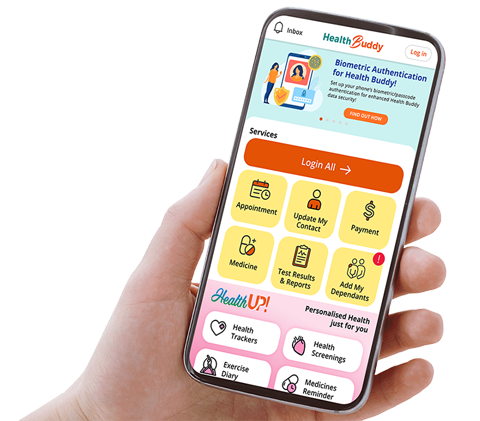
Need More Medicine?
Use Medicine Order Service on HealthBuddy.

Medicines Reminder
Get reminders and chart progress on HealthBuddy.
Related Conditions or Treatments
Related Medicines or Drugs
Health Articles

Stay Healthy The Easy Way

Get trusted health advice, offers and more.
Stay Ahead in Healthcare Industry

Subscribe to our exclusive updates for healthcare professionals.














Keep Healthy With


Follow SingHealth


© 2025 SingHealth Group. All Rights Reserved.